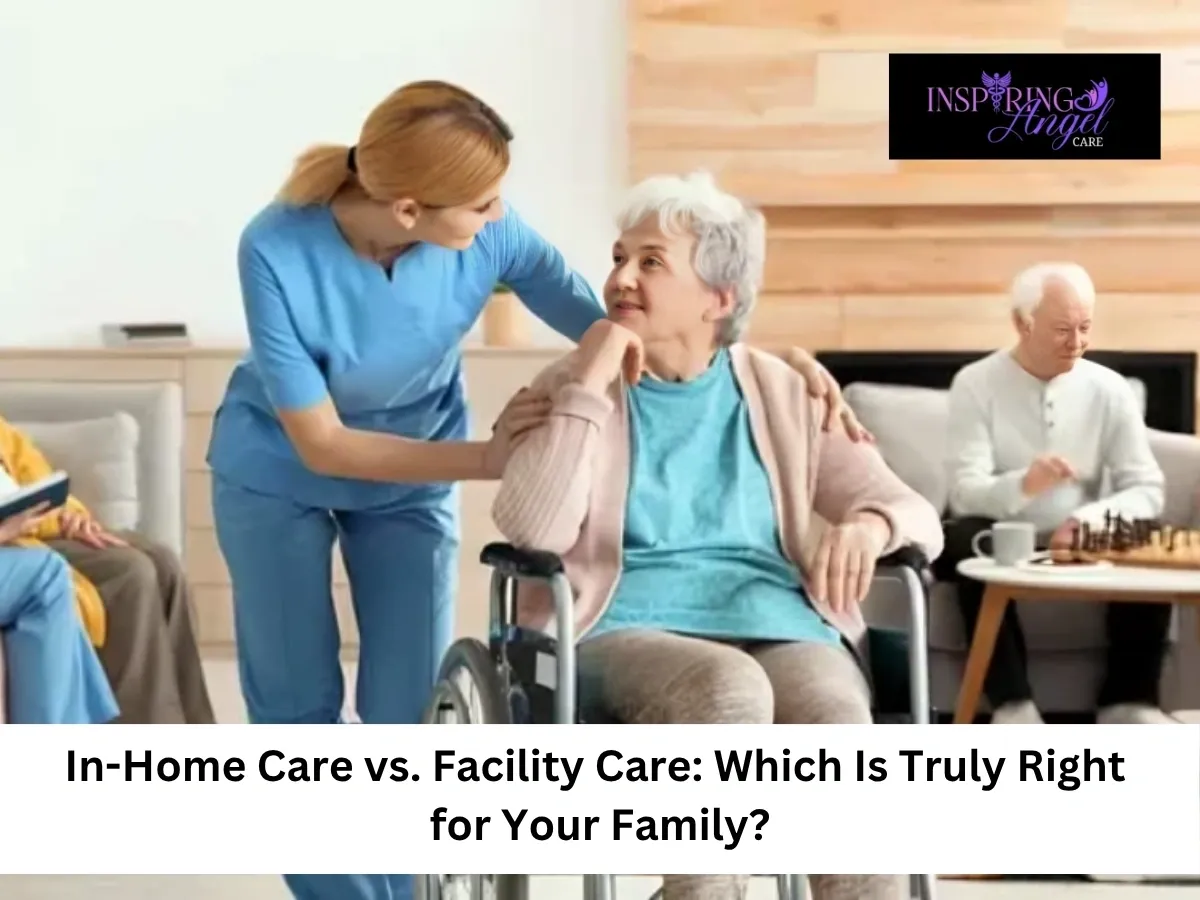
Choosing between in-home care and facility care is one of the most important and emotional decisions a family can make. It affects not only a senior’s health and safety but also their independence, dignity, and overall happiness.
At Inspiring Angel Care LLC, we understand how overwhelming this decision can feel. At Inspiring Angel Care, we believe everyone deserves to live with dignity, comfort, and independence at home. Our skilled professionals provide personalized care that is dependable and tailored to the unique needs of each client. From daily living support to companionship and supportive care, we help seniors live safely at home while also assisting families who qualify for the Passport Waiver program.
To make the right choice, you need more than surface-level comparisons. You need clarity, real-life context, and a deep understanding of what each option truly offers.
What Competitor Articles Often Miss
After analyzing leading articles on this topic, several gaps become clear:
- They explain differences but not real-life decision outcomes
- Limited focus on emotional well-being and loneliness in seniors
- Minimal breakdown of long-term home care cost comparison
- No structured decision-making framework for families
- Little attention to flexible care models or hybrid solutions
This guide fills those gaps with practical insights, examples, and actionable guidance.
Understanding the Two Care Options
What Is In-Home Care?
In-home care provides professional support for seniors in the comfort of their own home. It focuses on maintaining independence while offering help where needed.
Common services include:
- Assistance with bathing, dressing, and grooming
- Medication reminders and routine monitoring
- Meal preparation and nutrition support
- Light housekeeping and mobility help
- Companionship and emotional support
This approach is closely tied to independent living for seniors, where the goal is to preserve daily routines and comfort.
What Is Facility Care (Nursing Home Care)?
Facility care, often referred to as nursing home care, provides 24/7 supervision in a structured environment.
Services typically include:
- Round-the-clock medical care
- Skilled nursing and rehabilitation services
- Supervised meals and activities
- Support for chronic or advanced conditions
- Immediate emergency response availability
It is best suited for seniors who require constant medical attention or cannot safely remain at home.
In-Home Care vs. Nursing Home: Key Differences That Matter
1. Independence and Daily Freedom
- In-home care: Seniors maintain their routines and lifestyle
- Facility care: Daily routines are structured and shared
One of the strongest aging in place benefits is the ability to stay in a familiar environment, which helps seniors feel more in control of their lives.
2. Emotional Health and Comfort
Emotional well-being is often overlooked but extremely important.
Seniors receiving care at home often experience:
- Reduced anxiety and confusion
- Stronger family connections
- A sense of familiarity and safety
- Lower risk of depression
In contrast, facility care can sometimes feel isolating during the adjustment period, especially for seniors transitioning from long-term home living.
3. Home Care Cost Comparison
Cost is one of the most common concerns for families.
- In-home care: Flexible pricing based on hours and services needed
- Facility care: Fixed monthly cost that includes housing, meals, and medical care
In many cases, in-home care is more affordable for families who do not require full-time skilled nursing.
However, costs may balance out when extensive medical care is needed daily.
4. Level of Medical Support
- Facility care: Best for advanced medical conditions and continuous monitoring
- In-home care: Ideal for moderate assistance and non-critical medical needs
Families should carefully evaluate health conditions, mobility, and chronic illnesses before deciding.
5. Personalization of Care
One of the biggest advantages of home care is flexibility.
With personalized senior care plans, families can customize:
- Daily routines
- Caregiver schedules
- Level of assistance
- Emotional and companionship support
Facility care, while structured and safe, follows standardized schedules that apply to all residents.
Real-Life Scenarios to Help Families Decide
When In-Home Care Is the Better Fit
- Your loved one wants to stay in familiar surroundings
- They need help but are still physically stable
- Family members are involved in caregiving
- Emotional comfort is a top priority
Example: A senior recovering from surgery who needs temporary daily assistance but not hospitalization-level care.
When Facility Care Is the Better Fit
- Advanced dementia or Alzheimer’s care is needed
- Frequent medical emergencies or hospital visits occur
- Mobility is extremely limited
- No safe home environment is available
Example: A senior with multiple chronic conditions requiring constant monitoring and rehabilitation support.
The Growing Preference for Aging in Place
More families today are choosing aging in place because it offers:
- Greater emotional stability
- Familiar routines and surroundings
- Stronger family involvement
- Improved long-term mental health outcomes
Advances in caregiving services now make it possible for many seniors to safely remain at home longer than before.
Flexible Care: The Middle Ground Many Families Miss
A major insight missing from competitor content is that care is not always an “either-or” decision.
Many families benefit from hybrid care options such as:
- Part-time home care with family support
- Transitional care after hospital discharge
- Respite care for family caregivers
- Progressive care adjustments as health changes
This flexibility allows families to adapt care without disrupting comfort or safety.
How Inspiring Angel Care Supports Families
Choosing care is not just a medical decision, it is a life decision.
At Inspiring Angel Care LLC, we help families navigate this process with confidence by offering:
- Compassionate in-home care services
- Assistance with daily living and companionship
- Customized care planning based on real needs
- Support for families enrolled in the Passport Waiver program
Our goal is simple: help seniors stay safe, comfortable, and independent at home whenever possible.
Decision Guide: How to Choose the Right Option
Ask these key questions before deciding:
- What level of medical care is truly needed daily?
- Is the home environment safe and accessible?
- How important is independence to your loved one?
- What is the long-term financial plan?
- What environment supports emotional well-being best?
If most answers lean toward independence and moderate care, in-home care is often the better choice. If they lean toward medical complexity, facility care may be necessary.
Frequently Asked Questions
1. What is the biggest difference between in-home care and nursing homes?
The biggest difference is location and independence. In-home care allows seniors to stay at home, while nursing homes provide 24/7 structured facility-based care.
2. Is aging in place safe for seniors?
Yes, when proper support is in place. With trained caregivers and home modifications, many seniors safely age in place for years.
3. Which is more affordable: home care or facility care?
It depends on care needs. In-home care is often more affordable for part-time assistance, while facility care may be necessary for full-time medical supervision.
4. Can in-home care replace nursing home care completely?
Not always. In-home care is ideal for moderate needs, but nursing homes are better for advanced medical or high-risk conditions.
Final Thoughts
The decision between in-home care vs nursing home care is deeply personal and should never be rushed. It depends on health needs, financial planning, emotional well-being, and long-term goals.
For many families, in-home care provides the right balance of comfort, independence, and personalized support. For others, facility care offers the safety and structure required for complex medical conditions.
What matters most is choosing the option that ensures dignity, safety, and quality of life for your loved one.
Leave a Reply